When was the last time you checked whether your workplace's fire doors were compliant and performing as they should?
In busy workplaces, whether you're managing a single office or multiple buildings, fire doors are opened and closed countless times throughout the day. And while they might not demand much attention, even small defects can affect their performance when it matters most.
But maintaining fire door safety and compliance isn't just about spotting problems. It's about knowing what to check, understanding the risks and making sure the right action is taken.
That's where regular fire door inspections come in.
Fire Door Inspection Checklist: Five Essential Checks
A thorough inspection considers the complete doorset, from the frame and seals to the hardware that helps it perform as intended, and meet the relevant fire safety requirements.
1. Door Set Condition
First things first. What condition is the door actually in?
Check the door leaf and frame for damage, cracks, warping or deterioration. Even seemingly minor damage could affect its fire-resisting performance and compromise its ability to help prevent the spread of fire and smoke.
What to look out for:
• Cracks, dents or damaged door edges.
• Loose or damaged frames.
• Unapproved alterations, including additional openings or hardware.
Next step: Make a note of any damage and have it assessed by a competent professional. Even minor defects can affect how a fire door performs, so getting the right repairs or replacements in place matters. Our Core Works team can help manage the necessary remedial works, keeping fire safety and compliance in mind throughout.
2. Signage and Markings
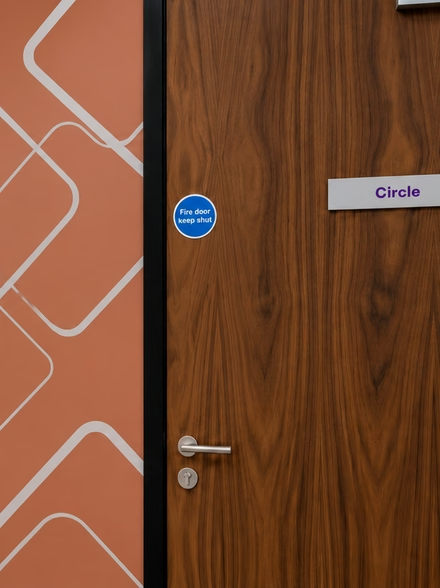
Not all fire doors require the same signage. Depending on their purpose, you might see signs such as 'Fire Door Keep Shut', 'Fire Door Keep Locked Shut' or 'Automatic Fire Door Keep Clear'.
These help occupants understand how the door should be used, while certification labels and identification markings can help establish its fire-resisting specification.
What to look out for:
• Missing, damaged or incorrect signage for the door's intended use.
• Obscured or damaged certification labels and identification markings.
• Doorsets whose fire-resisting specification cannot be established.
Next step: Check that signage matches the door's intended function and replace it where needed. If labels or identification markings are missing, or you're unsure about the door's specification, it's worth getting a competent professional to take a closer look. These markings can help identify a door's fire resistance rating, so while missing labels don't necessarily mean a door is non-compliant, further checks may be needed to confirm its suitability. For further guidance, you can refer to the GOV.UK fire safety guidance, or speak to our Core Works team for support with assessing your fire doors and identifying any necessary remedial works.
3. Gaps and Seals
Sometimes, it's the smallest details that make the biggest difference.
Intumescent seals expand in heat to help prevent fire spreading, while smoke seals restrict the movement of smoke. For many fire doors, gaps of approximately 3–4mm around the top and sides are typical, although the correct measurements depend on the doorset's specification.
What to look out for:
• Missing, damaged or painted-over seals.
• Excessive or uneven gaps around the door.
• Seals that are loose or incorrectly fitted.
Next step: Record any damaged seals or excessive gaps and have them professionally assessed. The right remedial works will depend on the doorset's specification, so it's important to get the right solution in place.
4. Door Ironmongery
A fire door needs to do more than look the part. It needs to work properly, too.
Hinges, closers and latches all contribute to its performance. A faulty closer could prevent the door from shutting fully, while worn hinges or misaligned hardware can affect how the door fits within its frame.
Importantly, a fire door should close completely from different open positions, without needing to be pushed shut. Where a latch is required, it should engage securely.
What to look out for:
• Loose hinges, missing screws or damaged hardware.
• Faulty closers, damaged latches or doors that drag against the floor.
• Doors that fail to close fully or latch where required.
• Doors wedged open or held open using unsuitable devices.
Next step: Test whether the door closes fully from different open positions. If it doesn't, check for obstructions and identify any faulty components. Coordinating the necessary repairs and follow-up checks helps ensure issues are properly resolved, without unnecessary disruption to your workplace.
5. Compliance and Reporting
An inspection shouldn't end with a simple pass or fail. A clear report should identify defects, explain the risks and establish what action is required.
What to look out for:
• Missing or outdated inspection records.
• Defects without clear remedial actions.
• Outstanding repairs with no recorded follow-up.
Next step: Prioritise findings according to risk, assign responsibility and record completed works. Keeping inspection findings, remedial actions and follow-up checks documented helps demonstrate how identified risks are being managed. A joined-up approach to compliance and building performance can help keep everything coordinated.
How Often Should Fire Doors Be Inspected?
Inspection frequency depends on the building's fire risk assessment, how frequently doors are used and applicable fire safety requirements.
In busy workplaces, regular checks and planned maintenance help identify wear and tear early, while more detailed inspections by competent professionals can help assess defects and determine what remedial works may be needed.
Beyond the Inspection: What Happens Next?
Identifying an issue is only half the job. Getting it resolved is what matters.
From minor repairs to specialist remedial works or complete replacement, every defect needs the right solution.
But managing inspections, contractors and repairs can quickly become time-consuming, particularly across multiple buildings. Through Core Works, we bring maintenance, compliance support and remedial works together, helping businesses address issues efficiently, minimise disruption and keep their workplaces safe and operational.
Need support with fire door compliance, remedial works or ongoing workplace maintenance? Core Works can help you manage it all, from identifying issues to getting the right solutions in place.