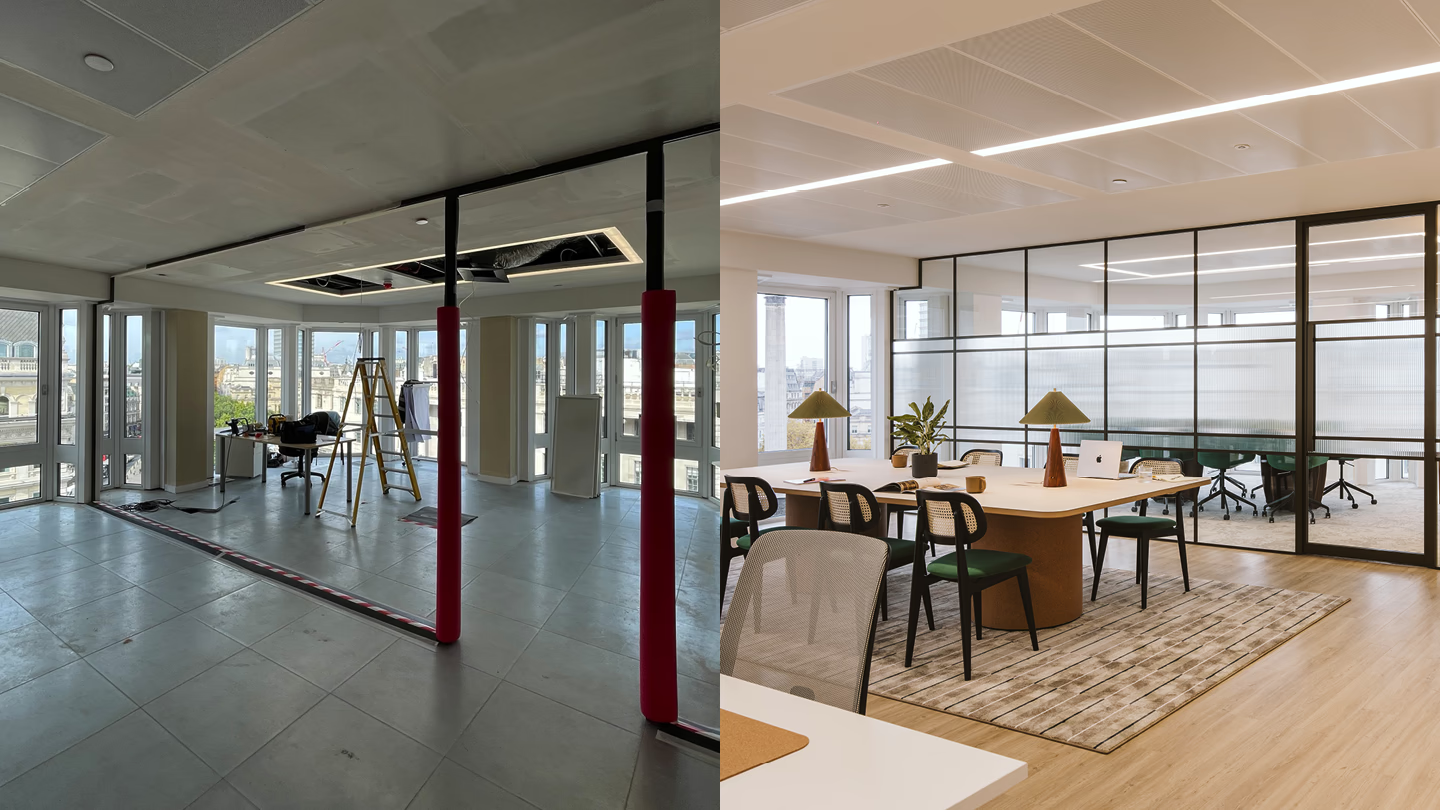

The workplace has changed. What was once managed as a facilities cost line – a mix of square footage and maintenance budgets – is now recognised as a strategic platform. Today, your office directly influences talent retention, brand credibility, ESG performance, and ultimately, your bottom line.
This shift has elevated the role of workplace design & build. It’s no longer just about fitting out a space. It’s about creating a business tool. The most forward-thinking organisations now treat workplace projects as integrated programmes, connecting strategy, design, budget, ESG, and technology into a single, coherent vision.
So, how do you make this shift from viewing your office as a cost to seeing it as a strategic asset? It starts by understanding that the physical environment is where your business strategy becomes real.
The Office is Now a C-Suite Priority
The conversation around the workplace has moved from the facilities manager’s desk to the boardroom table. Why? Because the purpose of the office has been fundamentally reset.
Hybrid working is here to stay, with office attendance having stabilised at around 30% below pre-pandemic levels. But this hasn’t signalled the death of the office. Instead, it has reframed its purpose. The office must now earn the commute. It has to offer something employees can’t get at home.
Research shows that the number one reason organisations keep an office is to foster collaboration and knowledge exchange. The challenge is that while 54% of companies want staff in three or more days a week, only 42% are achieving it. Mandates aren't the answer. The real solution lies in creating a more appealing work environment. In fact, for over half of companies, the biggest challenge is creating a "dynamic and inspiring" workplace.
This is where your workplace becomes a strategic lever. It’s a tangible expression of your investment in your people, a magnet for talent, and the physical manifestation of your culture.

The Four Pillars of a Strategic Workplace
A modern workplace project isn't about choosing paint colours and carpet tiles. It’s an integrated programme that delivers measurable business outcomes across four key pillars: Talent, Culture, ESG, and Technology.
1. Talent: The Workplace as a Recruitment Tool
In a competitive market, your office is a powerful tool for attracting and keeping the best people. The data is compelling. UK talent turnover stands at around 35% annually, and replacing an employee can cost anywhere from £10,000 to over £70,000.
Great workplace design has a quantifiable impact. Employees in well-designed offices are nearly three times more likely to stay with their company. And for the 54% of the UK workforce made up of Millennials and Gen Z, the quality of the office ranks among their top five criteria when choosing an employer.
Specific design choices move the needle:
- Choice and Agency: Giving employees control over where and how they work makes them 2.5 times more likely to feel their office supports productivity.
- Wellness Spaces: Companies that add at least one wellness space per 30 people see a 19% improvement in retention.
- Pride in Place: A staggering 90% of employees who like their workspace say they are proud to work for their company.
Your office is often the first physical touchpoint a candidate has with your brand. It speaks volumes about your values and your commitment to your team before you’ve even said a word.
2. Culture: Designing How Work Actually Happens
Culture shouldn’t be an afterthought layered onto a floor plan. It should be the primary design input. A workplace that reflects how your teams collaborate, innovate, and connect makes your culture tangible. It creates a feedback loop where the environment reinforces desired behaviours.
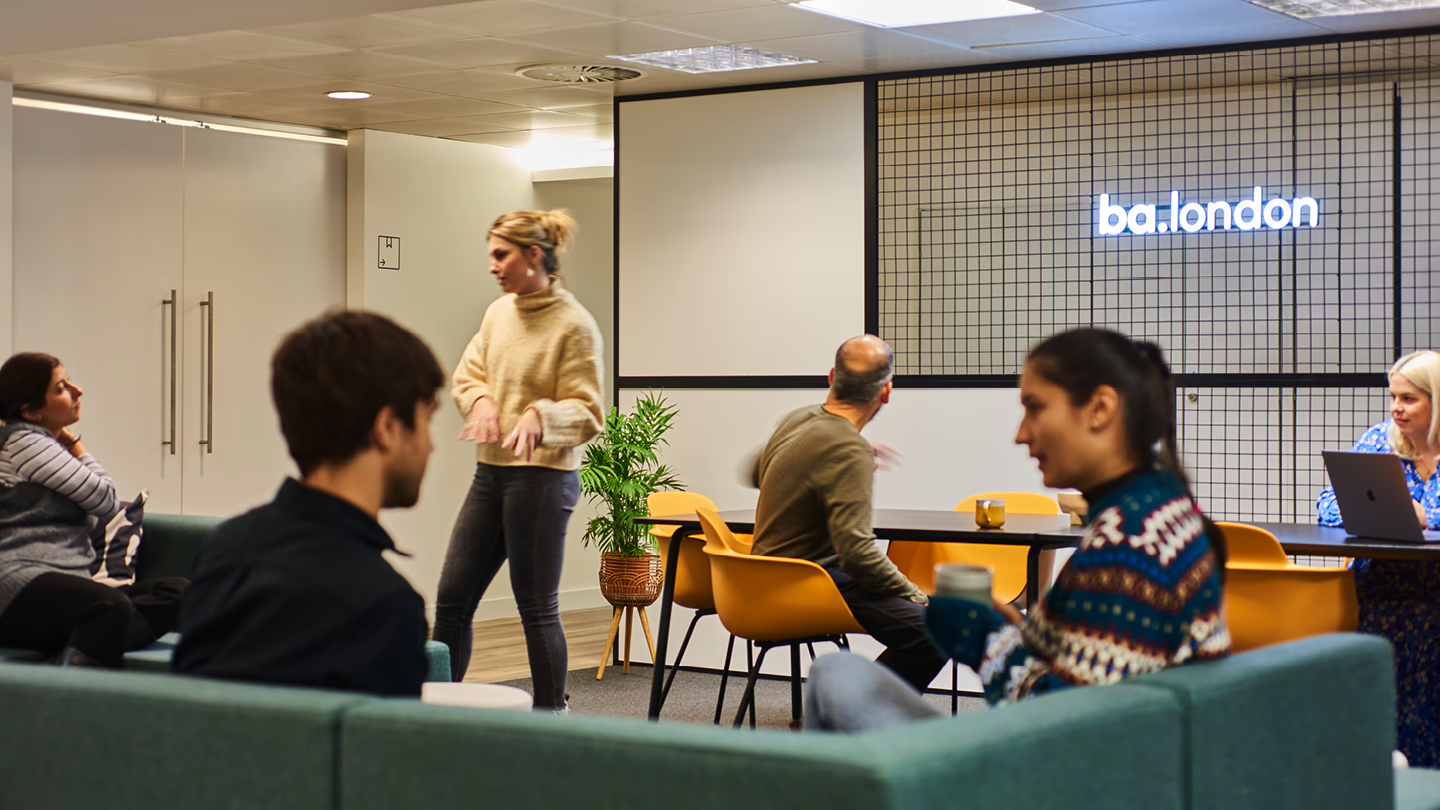
This means moving beyond the traditional open-plan office. The future is in "activity neighbourhoods" - clusters of diverse spaces designed for specific modes of work. These include zones for deep focus, collaborative ideation, social connection, and formal presentations. Reconfigurable furniture and movable partitions allow these spaces to adapt, flexing to the needs of the business day by day.
The office is where people build meaningful relationships and a sense of belonging. By designing for these interactions, you’re not just creating a place to work; you’re building a community.
3. ESG: Sustainability as Strategy, Not Just Compliance
Sustainability has moved far beyond energy-efficient lightbulbs. The new frontier is embodied carbon - the emissions generated from manufacturing, transporting, and installing fit-out materials. A typical fit-out can be responsible for 20-30% of a building's entire whole-life carbon emissions. With offices often refitted every eight years, the cumulative impact is huge.
This is why circular design principles are reshaping the industry. Instead of a linear "build and dispose" model, projects are embracing "long life, loose fit" thinking. This involves:
- Reusing and remanufacturing existing furniture and finishes.
- Using modular systems and pods that can be demounted and relocated.
- Sourcing second-hand or low-carbon alternative materials.
Certifications like WELL and SKA Rating are also becoming strategic assets. A WELL-certified office can see a 30% improvement in overall employee satisfaction and a 19% drop in absenteeism. These aren't just green credentials; they are measurable improvements in people's wellbeing and productivity.
Our recent Contractor of the Year award specifically highlighted our commitment to sustainable material reuse - it’s baked into our process.
4. Technology: The Digital Backbone of Your Workplace
Smart technology is the invisible force that makes a modern workplace run smoothly. AI-driven systems can now manage everything from HVAC and lighting based on real-time occupancy, to anticipating maintenance needs before a fault occurs.
This level of automation requires a robust digital backbone. Your data infrastructure and network capacity must be considered from day one. Integrating technology as an afterthought is costly and inefficient. The beauty of an integrated workplace design & build process is that this technology is woven into the fabric of the building from the very beginning.
The Power of an Integrated Approach
The traditional way of delivering projects - hiring an architect, then tendering the build - is slow and fragmented. It creates a split responsibility where the risk sits with you, the client.
The design & build model turns this on its head. It provides a single team responsible for the entire programme, from initial strategy to final handover. The evidence shows this approach is not just more efficient, but it delivers better results. D&B projects are completed 30-40% faster, with 6% lower costs and far greater budget certainty.
For a strategic workplace project, this integrated model is essential. It’s the only way to ensure that your talent objectives, cultural goals, ESG targets, and technology requirements are all aligned within a single, accountable programme.
How It Works in Practice: Mini Case Patterns
Let's make this concrete. Here’s how an integrated design & build approach solves real-world business challenges.
Pattern 1: The Growth SME – Scaling Culture Through Space
The Scenario: A fast-growing tech firm of 50 people has outgrown its first office. The challenge isn’t just finding more space; it's scaling the company culture without losing the collaborative spark that made it successful.
The Integrated Approach: A strategic workplace partner doesn't start with floor plans. They start with discovery. They analyse collaboration patterns, client hosting needs, and growth projections. This insight informs a design that bakes in flexibility - modular furniture, reconfigurable zones, and infrastructure that can support future headcount.
The design might feature a large, multi-functional table that serves as a space for team lunches, informal meetings, and even Friday-night table tennis, reinforcing the firm's social culture. Bespoke acoustic curtains could double as brand storytelling elements.
The Strategic Payoff: The new office becomes a powerful recruitment and retention tool. For an SME competing against larger firms for talent, a workspace that signals ambition, care, and flexibility provides a huge competitive advantage.
Pattern 2: The Rightsizing HQ - Hybrid-Era Optimisation
The Scenario: A large enterprise finds its pre-pandemic headquarters is now only 40% occupied on any given day. The goal is to right-size the footprint without retreating.
The Integrated Approach: The project begins with data. Utilisation analytics and employee surveys define the "workplace why" - the specific reasons people should come into the office. The design then follows this strategy. Rows of empty desks are replaced with vibrant collaboration neighbourhoods, quiet focus zones, and high-spec AV for seamless hybrid meetings.
Crucially, an ESG strategy is embedded from the start. A reuse audit identifies furniture that can be remanufactured. Surplus items are donated to local charities. The project targets a SKA Gold rating, turning a real estate decision into a tangible demonstration of the company’s sustainability commitments.
The Strategic Payoff: Real estate costs are reduced, and that saving is reinvested into creating a higher-quality space. Employee experience improves because the office is designed for how they actually work now. And the company’s ESG metrics get a significant boost.
Your Workplace Is Your Strategy
Investment in high-quality office space is accelerating. JLL predicts offices will return as the UK’s most-invested commercial real estate asset in 2026, with around £15 billion of capital flowing into the sector.
The organisations winning the war for talent and driving performance are those who see their workplace not as an expense, but as an investment. They understand that modern workplace design & build is a strategic discipline that translates business goals into a physical reality.
If you’re ready to create a workplace that empowers your people, inspires innovation, and delivers measurable results, let’s talk.