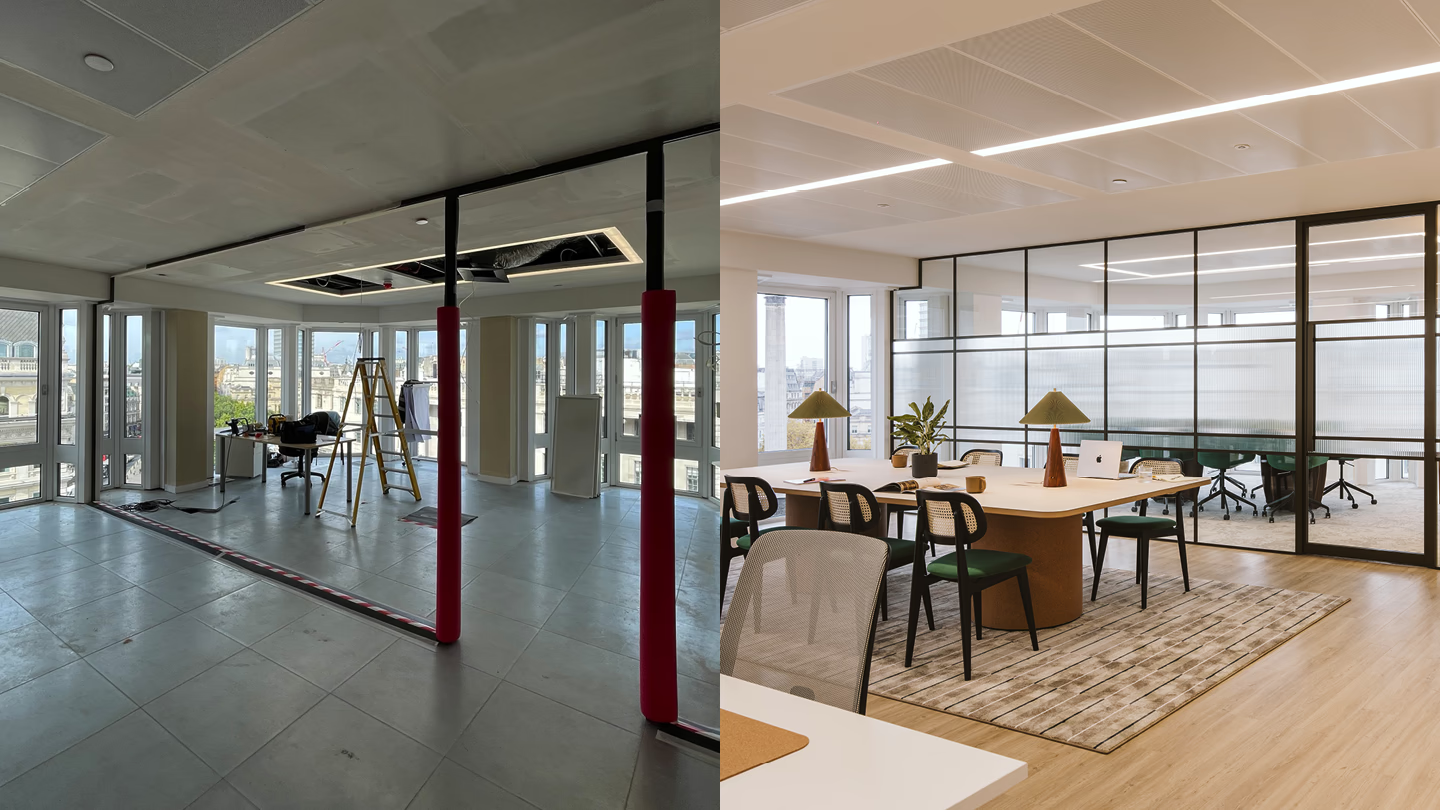
Creating a new workplace is one of the most exciting projects a business can undertake. It’s a chance to build an environment that empowers your people, reflects your culture, and drives your performance. But it's also a journey filled with complex decisions, where a small misstep at the start can lead to big problems down the line. We know it can feel daunting.
Since 2003, we’ve guided hundreds of clients through their workplace transformations. We’ve seen the common traps and we know how to avoid them. This guide is built on that experience. It walks you through the seven critical decisions that can make or break your project, giving you the frameworks to get them right and create a workplace you and your people will love.
1. Stay or Go: Refurbish vs Relocate?
The first decision is the big one. Do you stay and reinvent your current space, or do you move to a new home? This choice is often triggered by a lease event, but the real question is more fundamental: does our current workplace still support our people and our purpose?
The Case for Staying
Staying put and refurbishing has become a compelling option. Competition for high-quality Grade A office stock is fierce, and fit-out costs are rising. By remaining in situ, you get stability and continuity. Your people are already familiar with the location and their commutes, which is a huge plus. It’s an opportunity to modernise your space and realign it with new hybrid working patterns without the upheaval of a full relocation.
The Case for Going
Sometimes, your office simply can’t keep up. Relocation becomes the only logical step when your space can’t be economically reconfigured for modern work, when it fails to meet your ESG goals, or when the location no longer helps you attract the talent you need. A move can be a powerful statement. A fresh start in a building that truly matches your brand and ambition.
How to Decide
Before you dive into a detailed analysis, get a handle on three fundamentals:
- Timeline: When is your lease break or expiry? Deadlines can force your hand, so map out your critical dates from day one.
- Location: Is your current location a non-negotiable asset for your business and your team? Or would a new location open up better opportunities?
- Budget: What can the business realistically commit in the short term? Be honest about your financial parameters.
It’s also crucial to understand your existing lease inside and out. Dilapidations clauses - your obligation to return the space to its original condition-can result in claims costing more than a year’s rent. Engage your landlord early. Their plans for the building will directly impact your options. We’ve seen businesses accidentally miss a break clause, leaving them with no choice but to stay. Don't let that be you.
Our strategic space planning service helps you answer this question properly before you answer it permanently. We conduct an objective assessment of your current space utilisation and future needs, giving you the clarity to commit to the right path.
2. Refurbish, Relocate, or Plug-and-Play?
What’s the right move for your business? Your decision isn't just about location – it’s about choosing a space that works for your future.
- Refurbish: This means a full CAT B fit-out of your current office. It’s a chance to turn a familiar space into a workplace that’s tailored to your culture, brand, and new ways of working.
- Relocate: This route also leads to a bespoke CAT B fit-out. You find a new building – typically a ‘CAT A’ blank canvas with basic services – and transform it into your new home.
- Plug-and-play: Known as CAT A+, these offices are fully fitted and furnished by the landlord. You just plug in your laptops and get started.
CAT A+ is a great option for smaller organisations or those needing to move fast. It removes the complexity of a full workplace design & build project.
For any organisation where the workplace is a tool for attracting talent, nurturing culture, and driving performance, a bespoke CAT B fit-out is a smarter long-term investment. With 39% of UK employees saying their office design hinders productivity, settling for a generic solution is a risk.
There’s also a growing carbon dimension. A CAT B fit-out can contribute up to half the total upfront carbon cost of a new-build shell and core. With the UK Net Zero Carbon Buildings Standard on the horizon, these decisions now carry regulatory weight, not just financial ones.
3. Selecting the Delivery Route & Partner
You have two main routes for delivering your project: traditional procurement or design & build (D&B).
In the traditional model, you hire an architect to design the space, then tender the construction work to contractors. You manage multiple relationships and carry the risk if things don’t align.
The D&B model has become the go-to approach for commercial fit-outs, with around 85% of projects under £5 million now using this route. Here, a single partner takes responsibility for everything from initial concept to final construction. Research shows D&B projects are typically completed 12% faster and for 6% lower cost. You have one point of contact, one fixed price, and one team accountable for the outcome.
How to Choose Your Partner
Choosing a partner is about more than just a portfolio. You need to assess their:
- Design Capabilities: Do they have a collaborative process and in-house expertise to bring your vision to life?
- Construction Expertise: Can they demonstrate rigorous project management and a proven track record of delivery?
- Financial Stability: Are they transparent with pricing and able to complete the project on budget?
- Sustainability Credentials: Do they have proven experience with frameworks like BREEM or SKA, and a commitment to carbon-first material selection?
A vague brief produces vague proposals. Before you approach anyone, define your business outcomes, your preferred delivery model, and your honest budget. This will allow you to make a meaningful comparison.
We’ve operated a D&B model since our inception, and our awards track record proves our ability to deliver. For us, it’s simple: one team, one responsibility, one outcome - the workplace you briefed.
4. Phasing Works to Maintain Business Continuity
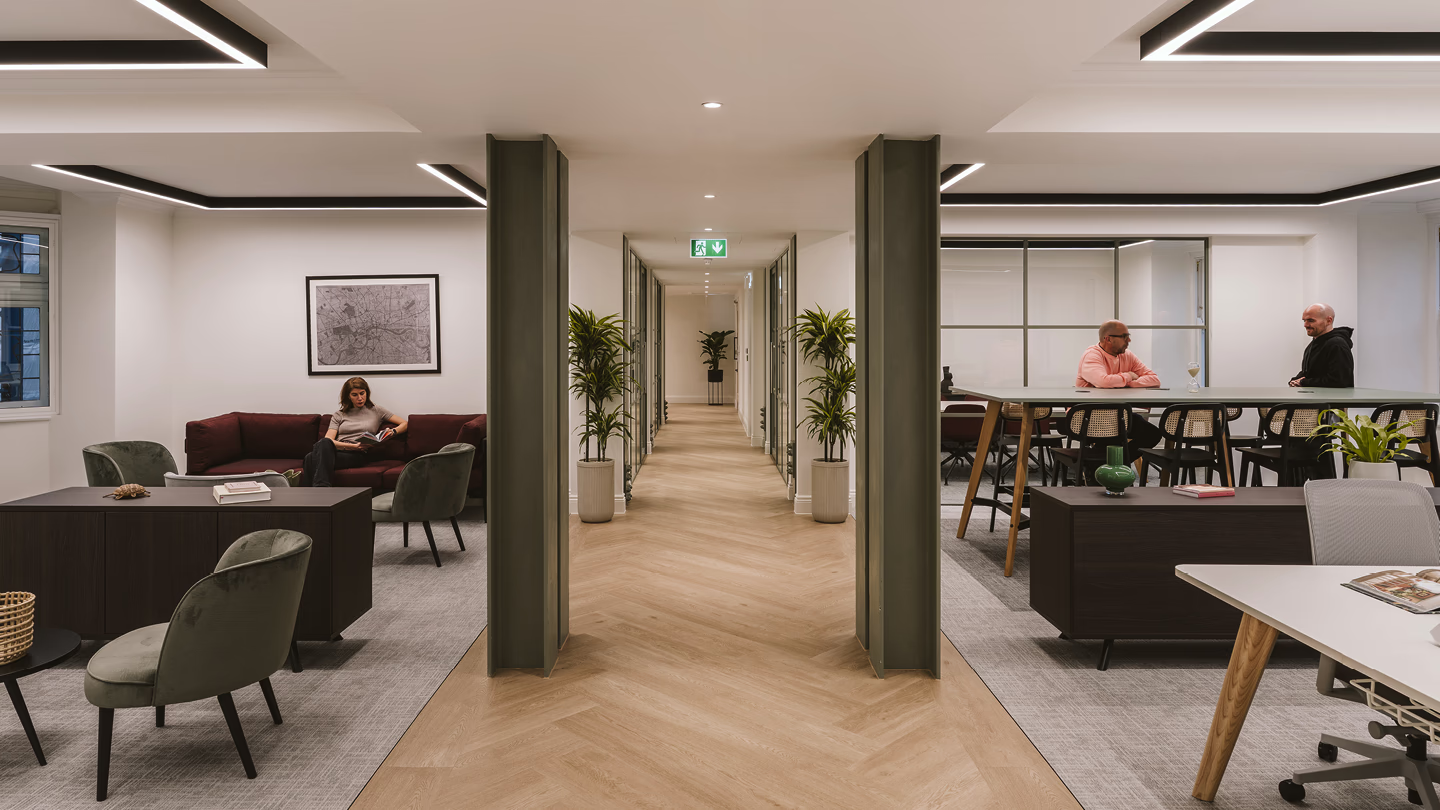
If you’re refurbishing your current space, you face a major challenge: how do you transform your office without bringing your business to a halt? The answer is a phased approach.
Disruption isn’t just an inconvenience; it has real costs in lost productivity, missed deadlines, and damaged morale. Phasing breaks the project into manageable chunks, completing one area before moving to the next so your teams can keep working.
Key strategies include:
- Starting with less critical areas like meeting rooms or breakout spaces.
- Establishing temporary workspaces for essential teams.
- Scheduling noisy construction work outside of peak business hours.
- Physically separating work zones for safety and noise control.
A phased approach might take slightly longer, but it avoids the cost and chaos of displacing everyone at once. We’ve found that clear, consistent communication is the single most important factor. Weekly updates, visual progress boards, and a single point of contact within your business to liaise with the site manager make all the difference.
Our project management is specifically designed around maintaining business continuity. We build around your business, not through it.
5. Achieving Cost Certainty in an Uncertain Market
Budget overruns are a common fear, and for good reason. Just one in three construction projects finishes within 10% of its original budget. With building costs forecast to increase by 15% over the next five years, locking in costs early is more important than ever.
Current benchmarks show a mid-specification fit-out costs in the region of £120-155 per square foot, all-in. For a 5,000 sq ft office, that means a budget in the region of £600,000 to £800,00. These costs will fluctuate depending on office size and the complexity of the building being worked in.
Why Budgets Overrun
The root causes are nearly always the same:
- Inaccurate initial estimates, often due to insufficient due diligence early in the project lifecycle
- Scope creep, late changes and rework resulting from poor project planning
- Appointing a main contractor that lacks the necessary experience required to undertake the project
- Unexpected issues discovered with the existing space, building, systems and/or furniture
- Supply chain and material price volatility
How to Guarantee Your Budget
Cost certainty is one of the biggest advantages of the D&B procurement route. The price is fixed upfront and developed whilst the design process is undertaken, not afterwards., And the risk sits with your contractor, not with you.
You can further protect your budget by:
- Defining the brief thoroughly: Don’t set a budget until your objectives are crystal clear.
- Undertake a Pre-Construction Services Agreement (PCSA) design process: A structured set of goals and timeframes to achieve a completed design before starting on site, particularly beneficial for complex or large scale projects.
- Building in contingency: A safety net of 5-10% for unforeseen issues is essential.
- Running value engineering workshops: This isn’t about cutting corners. It’s a creative process to find smarter, more cost-effective ways to achieve the desired quality, like finding a laminate that replicates a stone finish or sourcing materials locally.
Our integrated D&B model provides a single fixed price with transparent and comprehensive breakdowns. We give you the number before you need it, and we stick to it.
6. Making the Right Sustainability Choices
Sustainability is no longer a “nice-to-have” in workplace design; it’s a regulatory and commercial necessity. Minimum Energy Efficiency Standards (MEES) will require commercial properties to have an EPC rating of at least ‘B’ by 2030.
With 87% of UK office stock currently rated ‘C’ or below, a huge number of buildings will become unlettable without significant upgrades.
A Framework for Sustainable Fit-Outs
For office fit-outs, tenants can pursue sustainability certification through frameworks like BREEAM and SKA Rating. BREEAM is a comprehensive method that assesses the entire building, whereas SKA Rating is tailored specifically to fit-out projects.
Both provide clear, best-practice measures across energy use, waste management, materials sourcing, and employee wellbeing, offering a path to creating a verifiably sustainable space.
However, achieving full certification can be expensive. An alternative is to deliver projects that are ‘BREEAM Compliant’ or ‘SKA Compliant’. This approach involves following the principles and standards of the framework to deliver a highly sustainable fit-out, but without the final cost of official certification. The key is to find the right approach for the project’s specific goals and budget.
Key trends are now shaping almost every brief:
- Circular design: Starting with a reuse audit to see what can be kept, refurbished, or redeployed.
- Carbon-first material selection: Interrogating the embodied carbon of everything from flooring to furniture.
- Smaller, smarter footprints: Using hybrid working to right-size office space, reducing operational energy.
Our 2025 Contractor of the Year award from the London Construction Awards specifically recognised our commitment to sustainable material reuse. For us, sustainability isn’t an add-on; it’s engineered into every decision.
7. Getting Change Management Right
You can design the most incredible workplace in the world, but if you don’t bring your people on the journey with you, the project will fail. A fit-out or relocation is a huge change, and without proper support, it can cause stress, uncertainty, and disengagement.
Research shows that projects with excellent change management are six times more likely to meet their objectives. The business case is clear: happy employees are 13% more productive, and 84% would consider staying at a job longer if offered more wellbeing support.
A Structured Approach to Change
Effective change management is built on three pillars:
- Communication: Be transparent about what’s happening, when, and why. Connect the new workspace to the company’s strategy and values.
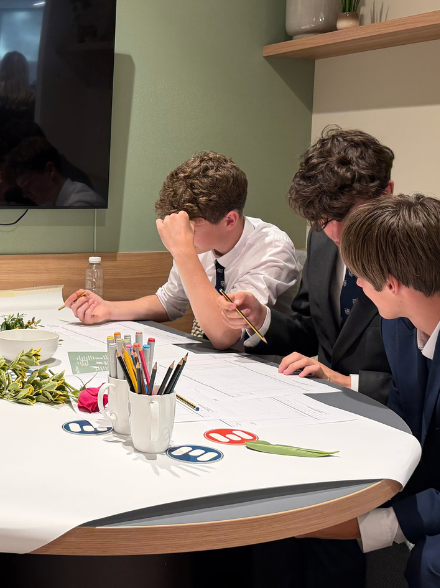
- Engagement: Involve employees early through surveys, workshops, and design consultations. This builds a sense of ownership and ensures the design solves real-world workflow challenges.
- Transition Support: Provide training on new technologies and new ways of working. A formal transition plan with welcome packs and site walkthroughs makes the move feel like a positive milestone, not a disruption.
Our "Love Your Workplace" philosophy puts people at the centre of everything we do. A workplace transformation fails if your team isn’t on the journey with you. We make sure they are.
Your Partner for a Project Done Right
Embarking on a workplace design & build project is a significant undertaking, but it doesn’t have to be a stressful one. By focusing on these seven decisions, you can navigate the complexities with confidence and create a space that delivers real value for your business.
If you’re looking for a partner who has seen all the traps and can guide you through the process with experience and care, let’s talk.